 01
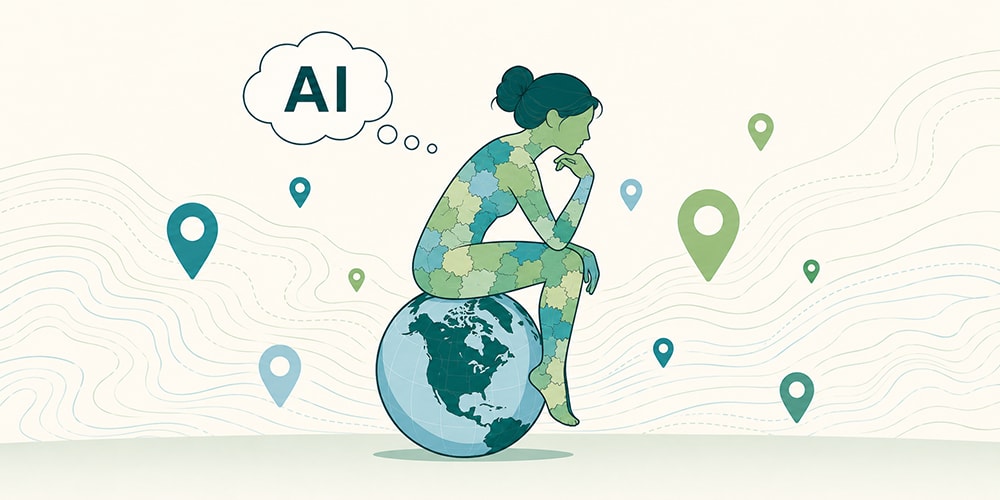
01 Teaching and Learning GIS in the Age of AI (Part 2 of 3)
AI is reshaping GIS education. But spatial judgment still belongs to the analyst. Part 2 of a series on teaching and learning GIS in the age of AI.
Writing
I write to make GeoAI and applied machine learning easier to understand, evaluate, and use. These articles connect research ideas with practical geospatial systems for GIS professionals, researchers, students, government teams, and technical leaders.
View all on Esri Canada ResourcesBlogs
01 AI is reshaping GIS education. But spatial judgment still belongs to the analyst. Part 2 of a series on teaching and learning GIS in the age of AI.
 02
02 AI is reshaping GIS education. But spatial judgment still belongs to the analyst. A three-part series on teaching and learning GIS in the age of AI.
 03
03 Mohamed Ahmed from Esri Canada interviews Stella Harden, winner of the Esri Canada Best Paper Award at the 2026 SKI Conference in Banff, Alberta.
 04
04 Discover how pairing eDNA with GIS creates a powerful, scalable solution for biodiversity monitoring in response to climate change.
 05
05 Discover how pairing eDNA with GIS creates a powerful and scalable solution for biodiversity monitoring and tracking species change in response to climate change.
Tipping elements connected to ocean and air circulations are at risk of crossing tipping points and causing significant changes in Earth climate.
Ice sheets, frozen soil ground, Arctic sea ice, and marine methane deposits could reach critical thresholds, leading to major shifts in our climate.
Mapping Earth climate tipping elements at regional and global scales is important to raise public awareness and for conducting risk assessments.
Visualizing Argo floats data in ArcGIS presents a powerful tool to monitor and visualize valuable information about the global ocean.
Learn how to use the pretrained deep learning models in ArcGIS to extract features, classify pixels, recognize texts, or detect objects from images.
Discover how to build algorithms to make predictions and find patterns in large datasets following best practices to ensure accuracy and efficiency.
Tutorials
 01
01  02
02  03
03 Biodiversity and Environmental DNA
 04
04 Oceanography
 05
05 Oceanography
 06
06 Arctic Oceanography
 07
07 Climate Science
 08
08 Climate Science
 09
09 Careers
 10
10  11
11 Arctic Climate
 12
12